 ENG
ENG
 INA
INA
Udayana University's Faculty of Engineering Receives a Visit from WastePlant Indonesia–Australia to Discuss Sustainable Waste Management Solutions
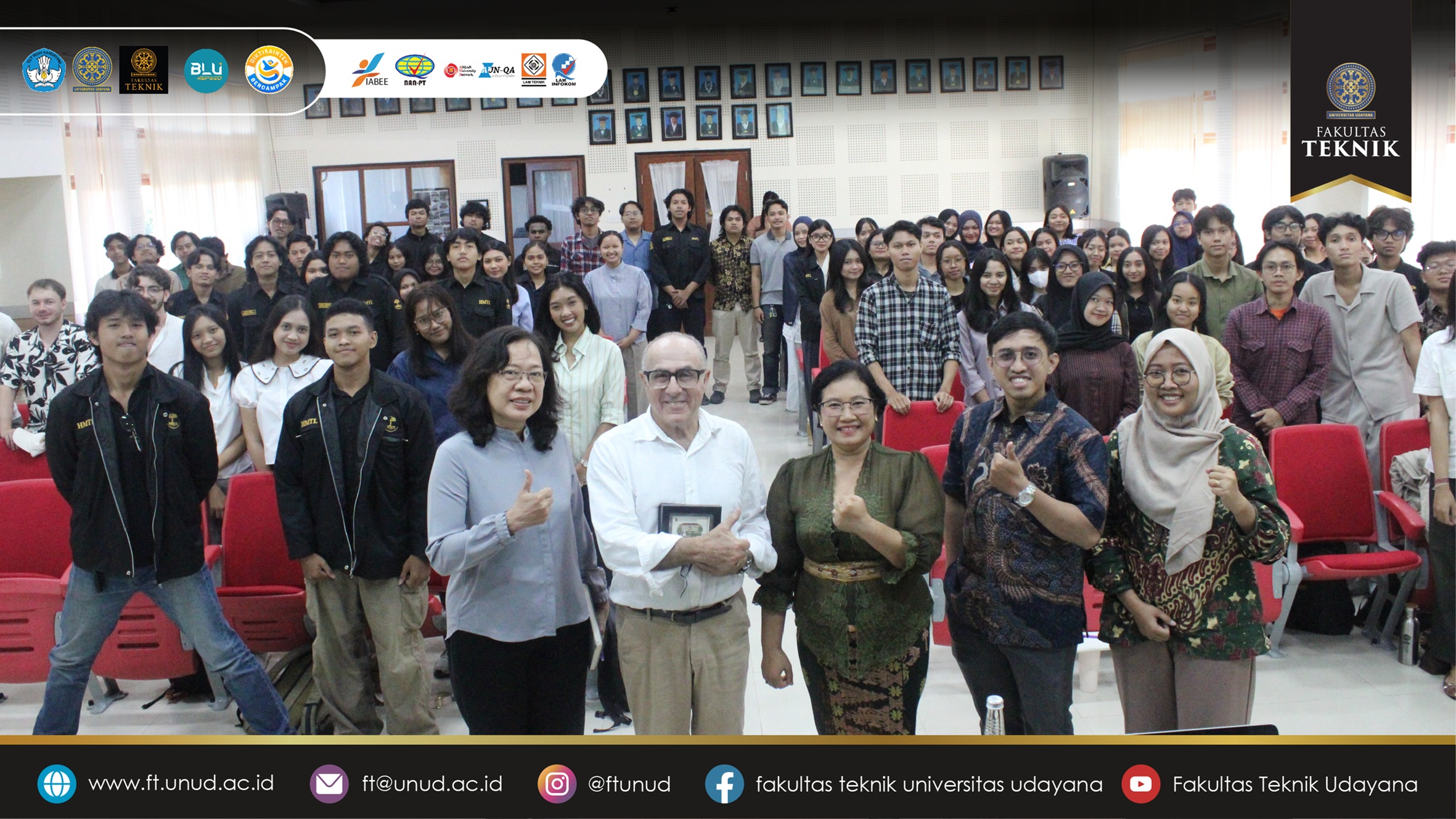
Jimbaran, June 11, 2026 – The Faculty of Engineering, Udayana University, hosted a visit from WastePlant Indonesia–Australia to explore collaboration and conduct a guest lecture on sustainable organic waste management. The event, held in Meeting Rooms I and II on the 3rd Floor of the Faculty of Engineering's Dean's Office Building, was attended by faculty leaders, lecturers, educational staff, and representatives from WastePlant Indonesia–Australia.
This visit was part of the Faculty of Engineering's efforts to expand its international network and support the development of innovative solutions to environmental problems. During the meeting, both parties discussed various collaboration opportunities that can be implemented in education, research, community service, and the development of environmentally friendly technologies.
The meeting was led by WastePlant Founder and Director, Andrew Hayim De Vries, who presented the WastePlant Gardenship technology development program as an innovative solution for managing food and municipal waste. This technology is designed to help reduce the volume of organic waste while supporting the creation of a more sustainable waste management system. The program was developed through collaboration with various stakeholders, including universities, government, research institutions, and the industrial sector.
In his presentation, he explained that WastePlant, together with Murdoch University Australia, is developing a national-scale program aimed at establishing pilot WastePlant Gardenship facilities in several strategic areas in Indonesia, including Bali, Jakarta, Lombok, and Surabaya. This program is expected to become a model for integrated waste management that can be implemented in various regions to help address the growing waste problem.
As part of the collaborative plan, WastePlant offers interactive workshops for lecturers and students of the Faculty of Engineering, Udayana University. Furthermore, there are plans to build a WastePlant technology demonstration unit in the Jimbaran area that can be used as a learning, research, and innovation development facility for the academic community. The presence of this facility is expected to provide students with broader practical experience in implementing waste management technology and understanding environmental challenges firsthand.
This collaborative program also involves several leading universities in Indonesia, including Hasanuddin University, the Sepuluh Nopember Institute of Technology (ITS), and the University of Mataram. The collaboration is supported by BRIN, Murdoch University Australia, and various other partners focused on the development of environmental technology and sustainable waste management.
The Faculty of Engineering at Udayana University welcomed the collaboration opportunity offered as part of the faculty's commitment to supporting the development of environmentally friendly technologies and improving the quality of higher education. This collaboration is considered in line with the faculty's efforts to strengthen the role of higher education in producing innovations that can provide tangible benefits to society and the environment.
The discussion was lively, discussing various opportunities for implementing WastePlant technology in Bali, potential joint research, and student involvement in activities based on environmental problem solving. The meeting also served as a platform to strengthen synergy between the academic world and international partners in supporting sustainable development.
This visit is expected to foster ongoing collaboration between the Faculty of Engineering at Udayana University and WastePlant Indonesia–Australia in the development of waste management technology, human resource capacity building, and the implementation of educational and research programs oriented towards environmental sustainability. The meeting marks the first step towards broader collaboration in supporting efforts to address waste issues and preserve the environment in Indonesia.
UDAYANA UNIVERSITY