 INA
INA
 ENG
ENG
Tropical Engineering Program Courses
Southeast Asian Architecture

The Southeast Asian Architecture Program is a transformative 15- week study abroad experience hosted by Universitas Udayana in Bali. Tailored for architecture and design students, this program provides a comprehensive understanding of Southeast Asia’s unique architectural heritage—from traditional Balinese homes to innovative resort designs. Participants delve into regional vernacular styles, environmental responsiveness, and cultural symbolism across Southeast Asia, with Bali’s architecture serving as a primary case study.Through modules such as Southeast Asian Vernacular Architecture, Resort & Hospitality Design, Interior Architecture, and Tropical Home Concepts, students explore how traditional Asian aesthetics and tropical design principles can harmonize with Western architectural demands. Excursions to architectural sites, cultural landmarks, and design studios deepen this learning experience, allowing students to witness sustainable and contextual design practices in real-world settings. By program’s end, participants will have cultivated the skills to integrate Southeast Asian and Western design concepts, fostering creativity in culturally responsive and ecologically mindful architecture.
IMPORTANT ISSUES
- Class Schedules:Summer Class: April - July
Winter Class: September-December - Duration: 15 weeks/1 semester
- Study Fees:
1. Study Fees: € 1950
2. The study fees include lectures, workshops, welcoming event, academic excursions & workshops, airport pickup and other student services.
3. The study fees EXCLUDE living costs, visa costs, accommodations, travel costs, and transportation - Credit Points: max. 30
- ECTS University: Universitas Udayana
STUDY DESTINATION: BALI, INDONESIA
Bali offers an exceptional backdrop for academic exploration, blending lush natural landscapes with a rich architectural heritage rooted in spirituality and sustainability. Known for its iconic rice terraces, volcanic mountains, and traditional temples, Bali presents a living example of tropical architecture that harmonizes with the environment. Here, students have the chance to witness how Balinese architecture seamlessly integrates natural materials and open spaces to promote ventilation, light, and a deep connection with nature. Beyond its aesthetic appeal, Bali’s architecture reflects cultural values centered on balance, spirituality, and community. This provides architecture students with a rare opportunity to study vernacular styles that prioritize sustainability, from indigenous bamboo structures to ecoconscious resort designs. By immersing themselves in Bali’s architectural landscape, students gain hands-on experience in combining Southeast Asian and Western design principles, paving the way for innovative and culturally relevant architecture in global contexts.
HOST INSTITUTION: UNIVERSITAS UDAYANA
As Bali’s oldest and most esteemed university, Universitas Udayana (Unud) provides an ideal setting for studying Southeast Asian architecture. Located in Bali’s cultural heart, Unud’s Faculty of Engineering, and specifically its Department of Architecture, is committed to education that emphasizes sustainability, cultural awareness, and hands-on learning. This program reflects Unud’s dedication to blending academic excellence with the island’s rich heritage in architectural design.The architecture department offers a robust curriculum rooted in Southeast Asian and Balinese traditions, making it a unique center for studies on vernacular architecture and sustainable design. The faculty includes renowned local and international experts who bring diverse perspectives on integrating tropical design principles with modern architectural needs. Students benefit from a curriculum accredited by international bodies, such as the ASEAN University Network (AUN) and the Indonesian Association of Architects, ensuring globally competitive standards. With Bali as a vibrant learning environment, Unud offers access to real-world applications through fieldwork, studio projects, and site visits, allowing students to explore the island’s unique building techniques and sustainable practices firsthand. This combination of rigorous academic training and cultural immersion makes Universitas Udayana a remarkable host for those looking to deepen their understanding of architecture within a Southeast Asian context
MODULES
1. Southeast Asian Vernacular Architecture (5 ECTS)
2. Resort & Hospitality Design (5 ECTS)
3. Interior Architecture (5 ECTS)
4. Tropical Home (5 ECTS)
5. Studio Project (8 ECTS)
6. Bahasa Indonesia – Indonesian Language (2 ECTS)
WORKLOAD
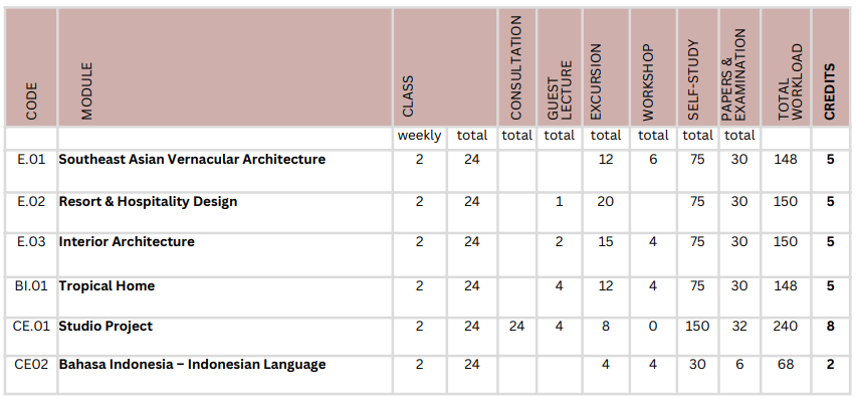
COURSE STRUCTURE
The Southeast Asian Architecture program is a 15-week course that starts with a welcoming dinner on the Saturday before classes begin. The first week includes orientation, followed by regular classes with lectures, workshops, and excursions. A two-week semester break falls around weeks 7 and 8 (or weeks 8 and 9), allowing students to explore Bali or Indonesia. Classes resume after the break, leading to final project presentations in week 14 and a graduation ceremony in week 15.
WEEKLY EXCURSION
Excursions and workshops are an integral part of the Southeast Asian Architecture Program, offering hands-on experience and practical insights that complement classroom learning. These activities immerse students in real-world architectural practices, covering topics such as traditional Balinese structures, sustainable building techniques, and culturally responsive design. Excursions are scheduled regularly and may include visits to iconic architectural sites, bamboo and eco-villages, and notable resort designs across Bali. Participation in these excursions and workshops is mandatory, fulfilling the 75% attendance requirement and enriching students’ understanding of architecture within Southeast Asia’s distinctive cultural and environmental context.
CERTIFICATES
Students will receive their official certificates from Universitas Udayana at graduation event. Upon successfully completing all course requirements, students will be awarded certificates as follows:
- A certificate confirming that the student has completed the full 15-week course.
- An academic transcript outlining the student’s performance throughout the program. The grades listed on the transcript will reflect the final marks.
- A certificate verifying the student’s participation in workshops and, upon request, certain academic excursion
Contact Us
For more information about the selection test, study period, and tuition fees, please visit at
https://studyinbali.com/programs/southeast-asian-architecture/

UNIVERSITAS UDAYANA